Showing posts with label Saurabh Singh. Show all posts

Monday, 10 March 2014

Why must we end foreclosures?

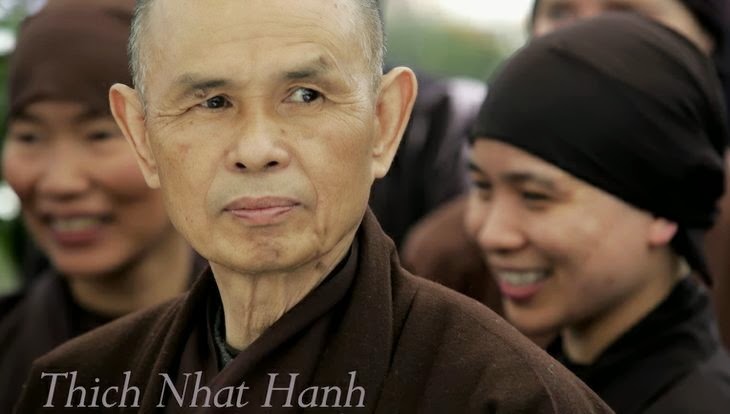
Looking deeply we can see that the borrower is the victim. It is naive to say that the lender foreclosed on the loan because the borrower defaulted. According to my teacher, Thich Nhat Hanh, "The manifestation of something or someone does not rely on one condition alone; it relies on many conditions. So, the idea that one cause can bring about the effect is not correct. One cause is never enough to help something manifest." So we must look further to see what else contributes to bring about a foreclosure. Perhaps then we will understand why I say that the borrower is the victim.

The valuation of the property is a very important factor along with financial hardship. In fact sometimes borrowers just stop repayments because it just doesn't make sense to pay an inflated price for a property when they can buy a better home for less. Even then the borrower is not at fault.

Lenders hire qualified individuals as underwriters and property appraisers who make the all-important decision of how much can be advanced to a borrower. It is the underwriter who assesses the financial qualifications of the borrower. Mind you, the lenders don't really look for poor, homeless, jobless individuals as customers. They look for individuals and families who can save enough every month to repay an amount that will be advanced to them which is determined by the lender. The amount of money that can be advanced to the borrower is capped at a certain percentage of the value of the property that will serve as the collateral. It is the lender, through its chosen property appraiser who determines the value of the property.

So we can see that the lender is not really providing housing to the homeless, jobless who really need financial assistance to buy a home more than anyone else but in fact are selling a product to those who they think can afford it. They are looking to profit. It is important to keep this in mind. They determine what you can borrow and they determine what the collateral is worth and they are looking to profit. You, as a borrower, are just participating in good faith, buying a shelter for your family. So your child can have his own room.

A few years later the old appraisal report is replaced with a new one and it is determined that your property is now worth much lesser than what it was initially appraised at. In fact, the outstanding balance on the mortgage is more than what the property is  worth. Your mortgage is now what is known as an "underwater" mortgage. Enter Ocwen, very eager to buy such loans.

In case, the borrower continues with repayments as usual, not only does the borrower end up paying a lot more for the house than what it is worth but also has to deal with Ocwen every month to make sure she is getting her statements on time and that her payments are being applied appropriately and on time. She may also find that her monthly mortgage repayments are now higher thanks to Ocwen adding expensive insurance or other fees. The borrower is the victim. The borrower ended up paying much more for property than what it was worth because of the lender's inability to value the property accurately.

Either due to reduced monthly savings generally caused by reduction in income or increase in expenses (many times due to medical reasons) or simply because the property is worth much less, the borrower who wishes to keep her home asks the loan servicer, Ocwen, to consider reducing the outstanding principal in line with the reduction in home value. Ocwen will advise the borrower that they consider loan modification requests only on delinquent accounts, pushing the borrower into defaulting. Once the borrower has defaulted, Ocwen add up enough on to the statement like late fees and property inspection fees etc. to ensure that the borrower cannot catch up any more. They simultaneously begin foreclosure proceedings. In the event that the property is located in nonjudicial foreclosure state like California the borrower faces a race against time to keep her home.

The common ownership of Ocwen and Altisource have little to gain from a loan mod or a short sale but have lot to gain from foreclosure. Altisource stand to earn Buyer's Premium, Listing commissions, Web Technology Fee, Title and Escrow fees, Property Preservation Fees, Closing Coordination Fees and more! They also earn fees to process foreclosures on behalf of Ocwen in states like California. They also earn property inspection fees and may source appraisal reports through their own unit Springhouse AMC.

Looking deeper we can also see that companies like Altisource Residential buy loans for much lower than what the underlying security is worth. So if they foreclose and sell the home, apart from Altisource earning these fees, they would also make a "tax free" profit! Its much like buying and selling homes for profit, only it is tax free. Foreclosure wipes out junior liens and judgments from title and also either completely wipes out or reduces the HOA dues. This makes it even more profitable to foreclose.

With rising "REO to Rental" activity we can see that it acts as a strong motivation to foreclose. With buying a house becoming almost unaffordable in places like San Fransisco demand for rental properties is rising and it provides better return than a loan modification.

If we are mindful we can see that there is no reason to reject a short sale and foreclose unless Ocwen are working to benefit Altisource. As a part of the Ocwen's Assisted Short Sale Program properties are listed on HUBZU.com. So all they need to do is go with the best offer. However, we can see that foreclosing and selling the property will make more money for Altisource. So we can see why they will reject the short sale and foreclose instead.

The borrower has the odds stacked against her in all scenarios. Even in the case where the borrower just walks away, it is the loan servicer at fault for failing to counsel the borrower appropriately. For failing to highlight the alternatives to the borrower.

"According to Vijñaptimatra Buddhism, there are two minds and three natures of reality. The deluded mind is the cause of all sufferings - the first link of the twelve links in the cycle of Interdependent Co-arising. This cycle is know as the cycle of birth and death and the nature of reality perceived under the influence of the deluded mind is known as parikalpit svabhav - Samsara. In Samsara there is parting, dissatisfaction and misunderstanding.

The other mind, the true mind, creates a world of suchness. There is no birth and death. No coming, no going. No after, no before. No one, no many. No existence, no non existence. It is complete, lacking nothing. This nature of reality is known as nishpanna svabhav - Nirvana. In Nirvana, there is no parting. There is satisfaction and understanding.

Deluded mind creates suffering. True mind creates happiness. The link between the two is paratantra svabhav - interdependence. So in order to reach the shores of nishpanna svabhav, we must go through the world of interdependence. We must constantly learn to see everything in the light of interdependence. We develop our mindfulness to enable us to constantly see the interdependent nature of things."

Vijñaptimatra Buddhism For Dummies

When we see the borrower's plight in the light of such conditions as highlighted above, we are already in the realm of paratantra svabhav. We can clearly see that the borrower is the victim and it is unethical to foreclose. When we look at things like this we are only a step away from ending foreclosures and what a relief that will be for homeowners! They only thing that stands in our way is the greed of individuals and corporations like William Erbey and Altisource. So they must be dealt with.

Let us work together, mindfully, towards the goal of ending foreclosures. Mindfulness will always keep us on the right track.

(The author, Saurabh Singh, is a student of the Buddhist monk Thich Nhat Hanh. He is a Foreclosure Prevention Activist and a vegan. He is also a member of People for Ethical Treatment of Animals(India), Consumer Advocates in American Real Estate, UNITES Professionals and supports various charitable causes and crowdfunding.)

Tuesday, 4 March 2014

Bill Erbey's Grand Designs

He sets up his companies at locations like Luxembourg, US Virgin Islands and Bermuda so they can save on taxes. He sets up companies like Altisource whose fortune depends on others' misfortune. Ocwen and Altisource Chairman, William Erbey, represents everything that is bad about our society today.

At a time when his country was struggling to deal with a recession that was brought about by a subprime mortgage crisis, Erbey found ways to contribute as little as possible to the government. Not only did he set up his companies at tax havens, he, in fact designed lines of businesses that seek to profit from his countrymen's misfortunes. Erbey champions a society that's driven by greed.

Twenty-six of the most powerful American corporations – such as Boeing, General Electric, and Verizon – paid no federal income tax from 2008 to 2012, according to a new report, conducted by public advocacy group Citizens for Tax Justice (CTJ), detailing how Fortune 500 companies exploit tax breaks and loopholes.

According to Cahir O'Doherty, " Everything connects: the bonanza being enjoyed by America’s super-rich is directly related to the drop in their tax rates - and as they prosper the public purse empties, so the nation faces devastating budget squeezes and the slashing of vital public services for the middle class and the poor.

Of course money doesn't grow on trees, but nor does it trickle down from rich men's pockets. But paying taxes is an obligation of citizenship, or it once was. If the rich want to escape their obligations to this nation or take their money abroad the better to hide it they should also lose their right to call themselves American citizens."

Bill Erbey's companies, Ocwen Financial Corporation (OCN) and Altisource Portfolio Solutions (ASPS), first induce default and push borrowers towards foreclosure then sell these foreclosed homes through their website HUBZU.com to earn Buyer's Premium, Listing Commissions, Title and Escrow Fees, Property Preservation Fees, Web Technology Fees, Closing Coordination Fees and more! In what is a direct conflict of interest between Ocwen's investors and Altisource, Altisource execute real estate purchase contracts on behalf of Ocwen paying themselves Title insurance and related search fees (to Premium Title, an Altisource company), Property Preservation Fees, Closing Coordination Fees etc.

Altisource Residential (RESI) intend to acquire single family residential homes, renovate them and rent them out. Only they don't buy any properties. They buy non-performing loans. Altisource Asset Management Company (AAMC) acquires and manages nonperforming loans on behalf of Altisource Residential (RESI). A majority of these will end up being foreclosed so they can be rented out or sold through HUBZU.com for a profit! Add to that the fees they will earn... more money! They clearly have vested interests in foreclosing homes!

Real estate agents are losing their inventory to Altisource who also function as a listing agency through their unit Real Home Servicing and Solutions. Title insurance revenues are being driven to NewSource, a company which has no employees! AAMC own 100% of shares with voting rights of NewSource and RESI own 100% of non-voting right shares. NewSource pay Altisource (ASPS) a performance fee of 90% of the net income after paying out a preferred dividend of 12% to RESI.

People have been pushed into defaulting by Ocwen who put unauthorized insurance fees and other charges depleting ordinary, unsuspecting people's escrow balance and making their monthly mortgage repayments unaffordable. Ocwen are notorious for not applying payments on time and then asking for late fees.  According to the data made available by the Departments of Treasury and Housing and Urban Development, Ocwen approved 23% of the modifications they processed under HAMP since the program's inception. Compare this with Bank of America's 44%, CitiMortgage's 43% and Wells Fargo's 35%. So they are not exactly pushing loan mods, neither are they pushing short sales. They are just looking to foreclose so Altisource can profit! Borrowers are being subjected to a nightmare.

How will we heal the wounds of the people who have suffered at the hands of Bill Erbey and his companies?

(The author, Saurabh Singh, is a student of the Buddhist monk Thich Nhat Hanh. He is a Foreclosure Prevention Activist and a vegan. He is also a member of People for Ethical Treatment of Animals(India), Consumer Advocates in American Real Estate, UNITES Professionals and supports various charitable causes and crowdfunding.)

Thursday, 27 February 2014

Designing your campaign to win justice for Ocwen-Altisource victims

Many have been hurt by Ocwen and Altisource. People who have lost their homes - families, single moms, children, senior citizens. Realtors have been hurt. Vendors, buyers, employees.... the list goes on. Those who are blinded by greed deny others what is rightfully theirs. If more money can be made by paying employees poorly, then why not? If more money can be made by squeezing something out of a poor realtor's commission, why not? That is how they think - those who are driven by greed. They snatch from others what does not belong to them - homes, ideas, intellectual wealth, customers... This is theft. This is a crime. It promotes social inequality. Victims experience sorrow and despair and many loose their faith in natural justice.

The victims of Ocwen-Altisource have thus far obtained little success. Most have given up. Some think they are too small to make a difference. Some think that no one will help them. Some just have to give up because it isn't financially feasible to fight Ocwen-Altisource.

Must we then give up? Should we not help our sisters who are on the verge of being forced out of their homes? Those very realtor friends who stood by us, recommended us, helped us in many ways now face a future of uncertainty as Altisource craft strategies to snatch their inventory. Move over Mrs. Hudson, Sherlock Holmes will now live in an Altisource rental home! Perhaps plans are in place to remake "The Apartment", with Baxter now living in an Altisource rental home! They have money, staff, attorneys, PR firms... what do we have?

We have the five powers. Faith, energy, mindfulness, concentration and understanding. Using these we can help others and ourselves.

Are you too small to make a difference? "If you think you are too small to make difference, try sleeping with a mosquito." A small mosquito can cause a lot of trouble, even malaria. Have faith in your abilities.

When contacting regulatory authorities, attorney generals, congressmen etc. you will need to keep in mind that they are not Realtors or employees of Altisource. You may need to simplify Ocwen-Altisource's complex business structure and explain how it is designed to promote foreclosures. And you will have to do this repeatedly. Does your congressman know much about OMAT 1 REO Holdings or Blue Valley Apartments or HLSS or NewSource? Possibly not. Ocwen-Altisource have designed a business structure that can confuse even very experienced analysts. Government officials are busy people who may not know much about loan servicing and Ocwen and Altisource.

You may use information available here:
http://themisplacedphilosopher.blogspot.in/2014/02/how-ocwen-altisource-are-hurting.html

And here:
http://themisplacedphilosopher.blogspot.in/2014/02/you-may-take-your-ocwen-complaints-to.html

We will need to create awareness about Ocwen-Altisource among lawmakers, regulators, media-men and people in general. If you wish to help, spend 30 minutes in a day writing to people who matter in your state or to people at CFPB or DFS or media-men explaining how you have been hurt by Ocwen-Altisource's predatory practices. Explain how this will hurt your community. You will need energy. It comes from faith.

In India, if you submit rent receipts and proof showing investment in certain types of financial instruments, you can save on the amount of tax you are required to pay. I have never done that believing that the more tax we pay, the more we strengthen our nation. My friends at Altisource group of companies remind me that they are headquartered in Luxembourg and US Virgin Islands so they can save on taxes! They certainly don't think like me.

Please do spend some time to help heal the wounds people have suffered at the hands of Ocwen-Altisource and help prevent others from experiencing the same fate. If we are mindful, we can make a lot of difference. Concentration will develop. With concentration, understanding will develop. Looking deeply we will know all there is to know. To be free. To be happy and to make others happy.

(The author, Saurabh Singh, is a student of the Buddhist monk Thich Nhat Hanh. He is a Foreclosure Prevention Activist and a vegan. He is also a member of People for Ethical Treatment of Animals(India), Consumer Advocates in American Real Estate, UNITES Professionals and supports various charitable causes and crowdfunding.)

Tuesday, 18 February 2014

Vijñaptimatra Buddhism For Dummies

What is most precious in this world? What is it that truly makes you happy? If you think it is love, you are already a Vijñaptimatrin. Buddha's love is unconditional. It has no barriers, no limitations. This selfless love which is unconditional, without any limitations, devoid of any expectations is true love. All you need is love. This love ends all sufferings. Happiness is experiencing love.

Vijñaptimatrins learn to love like this, so they can be happy and they can bring joy to others. Vijñaptimatra Buddhism is the path of love, the path of Maitreya - the Buddha of love.

Like you go to a medical school to become a doctor. Here you become a Buddha. Until you have become a doctor, you are a student. Here, you are a Bodhisattva until you become a Buddha. Much like school, here too we have grades - Bodhisattva bhoomis.

Vijñaptimatra (pronounced vigyapti-maatr) means manifestation-only. It means that there is no birth, no death. We are not created or destroyed. We manifest. Everything around us is a manifestation. A rose manifests when the required conditions are present. The seed, water, earth etc. It is not born and it never dies. When conditions are right, we manifest. A manifestation is an appearance of signs. It is not birth. The absence of conditions supporting manifestation is not death.

The Geography Of Samsara and Nirvana

According to Vijñaptimatra Buddhism, there are two minds and three natures of reality. The deluded mind is the cause of all sufferings - the first link of the twelve links in the cycle of Interdependent Co-arising. This cycle is know as the cycle of birth and death and the nature of reality perceived under the influence of the deluded mind is known as parikalpit svabhav - Samsara. In Samsara there is parting, dissatisfaction and misunderstanding.

The other mind, the true mind, creates a world of suchness. There is no birth and death. No coming, no going. No after, no before. No one, no many. No existence, no non existence. It is complete, lacking nothing. This nature of reality is known as nishpanna svabhav - Nirvana. In Nirvana, there is no parting. There is satisfaction and understanding.

Deluded mind creates suffering. True mind creates happiness. The link between the two is paratantra svabhav - interdependence. So in order to reach the shores of nishpanna svabhav, we must go through the world of interdependence. We must constantly learn to see everything in the light of interdependence. We develop our mindfulness to enable us to constantly see the interdependent nature of things.

The Science Of Samsara and Nirvana

According to my teacher, Thich Nhat Hanh, "The Three Dharma Seals of impermanence, nonself, and nirvana are the keys to understanding the Manifestation Only teachings. The first key is impermanence, and it is used to open the door of reality concerning time. Nonself, the second key, is used to open the door of reality concerning space. They are spoken of as different but in truth they are one. Time and space are one. One cannot be without the other. The third key, nirvana, is the fulfilled nature, the reality of no birth, no death; no coming, no going; no one, no many; no existing, no not-existing. This is the world of Interdependent Co-Arising, where nothing exists as a separate, permanent entity. Impermanence and nonself go together with the nature of interbeing.

To touch nirvana, to see the interdependent nature of reality, we have to touch impermanence and nonself. The nature of imaginary construction goes together with our deluded beliefs in permanence and a separately existing self. We see the world around us as permanent and consisting of separate self-existing entities. That is why when we begin the practice we need to use the two keys of impermanence and nonself to shine light on the Interdependent Co-Arising nature of all things."

Our Toolkit

In the words of my perfect teacher, Thich Nhat Hanh, "The Buddha taught that there are Five Powers. First is the power of faith. We need to have faith in the possibility of touching nirvana, of awakening to suchness. This is not blind faith, it is based on our understanding, insight, and experience. Faith leads to energy, the second power. Without faith and confidence, we easily get tired. To have the energy to look deeply into things, we need to have confidence in our capacity for awakening, and faith in the awakened understanding of the Buddha. We transform our energy into mindfulness, the third power. Where there is mindfulness, there is concentration, the fourth power.

When we live in mindfulness, everything takes place in the concentration of looking deeply. We can see the interdependent co-arising nature of things within and around us. When our concentration is weak, we might be able to see their interdependent nature for a short time, but we soon fall back into seeing things as permanent and having a separate self. But with strong and steady concentration, we can continue to see the nature of interbeing of things within and around us. When our concentration is great, it leads to the fifth power, understanding. With understanding we don’t spend time dreaming of the future or dwelling in the past. We wake up to our true mind. With one mindful step, we enter the Realm of Suchness. Understanding, in turn, strengthens our faith. The Five Powers help each other."

Our Curriculum

Samadhi of Emptiness - Emptiness is interdependent co-arising, impermanence and nonself. We are empty of a separate, independent self. A rose is not separate from water, earth, sunlight etc. We practice nourishing this insight all day long.

If we think that we or others are separate from each other then we create conditions for selfishness and expectations. We must free others, not enslave them. True love is devoid of selfishness and expectations. True love is empty.

Text that I follow - Heart Sutra (commentary by Thich Nhat Hanh).

Samadhi of Signlessness - A rose is made of non-rose elements. Looking at a rose we see the elements that produce a rose. Learning to see in this manner, we learn to go beyond time and space. We learn to not get caught in the four signs - self, person, living-being and lifespan.

If we think that we or others are persons or things, or have a lifespan, we will experience parting. In true love there is no parting. True love is signless.

Text that I follow - Diamond Sutra (commentary by Thich Nhat Hanh).

Samadhi of Aimlessness - Aimlessness is learning to live in the here and now. We practice mindful breathing, mindful eating, walking etc.

If we are not present, we cannot show our love. If the mind is elsewhere then we miss the present moment. What is more important that to love and be loved? There is nothing to attain. Nothing to become. True love is aimless.

Texts that I follow - Discourses on the full Awareness of Breathing (Majjhima Nikaya Sutra # 118, and Samyukta Agama Sutra # 803, 810 and 815 commentaries by Thich Nhat Hanh) and Fourteen Mindfulness Trainings as taught by Thich Nhat Hanh.

Our Mantra

No coming, no going,
No after, no before.
I hold you close to me,
I release you to be so free.
Because I am in you,
And you are in me.

(The author, Saurabh Singh, is a student of the Buddhist monk Thich Nhat Hanh. He is a Foreclosure Prevention Activist and a vegan. He is also a member of People for Ethical Treatment of Animals(India), Consumer Advocates in American Real Estate, UNITES Professionals and supports charitable causes and crowdfunding.)
Sunday, 16 February 2014

Altisource PPI

Think. Act.

Veganism and Buddhism

Buddhism is learning to do the right things - to practice and promote right mindfulness, right view, right thinking, right action, right speech, right concentration, right diligence, right livelihood. It is the path to happiness. The foundation of happiness is freedom, so it is also the path to liberation. It is likely then that one who wants to be free respects, practices and promotes freedom.

Veganism is the practice of respecting the right of all sentient beings to be free. Vegans practice living in a manner that they do not end up using other sentient beings as resources like food or slaves and avoid exploiting their body and mind.

Thus, vegans do not consume milk or meat or butter or cheese or eggs. They do not use leather or animal-tested cosmetics or anything that comes from an animal or that might have jeopardized an animal's welfare, health or freedom. They practice living in this manner to the extent possible. The Buddha of our times, Thich Nhat Hanh, is a vegan.

In Buddhism there are many precepts. These are vows or declaration of our commitment to practice certain wholesome actions and avoid unwholesome actions. One of such precepts is not to harm other sentient beings. Killing and eating them may rightfully be construed as causing harm to them. It is also not mindful consumption - a violation of another precept. Similarly, not taking what is not rightfully ours is another precept. We can argue that the skin of an animal is not rightfully ours, so we should not use leather or fur. Similarly, we can say that other precepts are violated by not practicing and promoting veganism.

Samsara is imperfect. And yet, it leads to nirvana. A world of imperfections can be transformed into a perfect existence. Samsara and nirvana are in our mind, one exists because of the other. The imperfect samsaric existence can help motivate us to be free. We practice the precepts with the intention to be free and to help others be free from samsaric existence - an experience of suffering.

The foundation of suffering is slavery. We watch helplessly how people are killed and children harmed and women assaulted. We cannot prevent death or sickness or old age or desires. We are slaves to causes and conditions. This makes us suffer.

In spirit, veganism and Buddhism are so closely connected. In one we can clearly see the other. When we practice the precepts we are practicing veganism and vice versa. We are practicing and promoting freedom. By practicing in this manner we truly create conditions for liberation. We nurture the Buddha in us.

(The author, Saurabh Singh, is a student of the Buddhist monk Thich Nhat Hanh. He is a Foreclosure Prevention Activist and a vegan. He is also a member of People for Ethical Treatment of Animals(India), Consumer Advocates in American Real Estate, UNITES Professionals and supports charitable causes and crowdfunding.) 

Saturday, 15 February 2014

Stop Ocwen and Altisource!

Ocwen and Altisource, through a systematically designed process, induce foreclosures and then sell these foreclosed home on HUBZU.com so they can earn listing commissions, Buyer's Premium, Escrow Fees, Web Technology Fee, Property Preservation Fees, Title Insurance Fees, Closing Coordination Fees and more!

Thursday, 13 February 2014

Give Us Hope, Mr. Lawsky!

Where would you like to be when you are old? I don't know how to read minds but I am sure you don't want to be homeless. I am sure you don't want to helplessly see your home foreclosed by a bunch of crooks driven by greed.

Many old people, cancer patients, newly married couples, single moms, among others have been evicted by the loan servicer Ocwen. Many have seen their short sale requests turned down only to watch their homes sold for lower prices to builders and investors. As per the allegations, Ocwen used deceptive and unfair means while working with borrowers who were delinquent and underwater. The company has been accused of misrepresenting facts while filing foreclosure documents, charging unjustified fees for default-related services and forcing borrowers to buy unnecessary insurance policies, among others.

Greed of the lenders led to the subprime mortgage crisis which in turn created an economic crisis which led to people losing income and jobs. People struggled to meet their high-interest mortgage repayments. Some requested for forbearance, some wanted their loans refinanced, some thought a short sale would help ease the strain on their finances.

Greed, though, was not dead yet. Those engulfed by greed only seek profits. To them it does not matter even if it comes from someone else's misfortune. One man finds himself standing against an organization driven by greed of such intensity that has seldom been seen before.

Benjamin Lawsky, Superintendent of the Department of Financial Services, had little option but to block the Ocwen-Wells Fargo deal in a bid to prevent more Americans being unwittingly led towards foreclosure by a loan servicer with a consistent track record of delay in providing statements, adding expensive and at times unnecessary insurance to accounts, not applying payments to account or applying them late. What more, its Chairman is the single largest shareholder in a company (Altisource Portfolio Solutions) that profits immensely from foreclosures and snatches away the livelihood of real estate agents trying to feed their families.

Mr. Lawsky's grandparents, immigrated from Nazi Germany to an apartment on 192nd Street after his grandmother’s father had been killed at Auschwitz; his parents, in turn, had made good through public schools, graduating from Bronx Science and C.C.N.Y. His father was in the U.S. Public Health Service, and Mr. Lawsky and a twin sister were born on a Navy base in San Diego before the family moved to Pittsburgh, where Mr. Lawsky grew up waiting tables and selling funnel cakes out of a food cart. As a high school point guard, he was recruited by several small schools but chose to attend Columbia, where he played briefly as a walk-on before taking up long-distance running. He wanted to study architecture, but, faced with drawing cubes, switched to art history. He became interested in the law when a controversial exhibition of Robert Mapplethorpe photographs in 1989 sparked a national conversation about art and the First Amendment. He graduated cum laude and enrolled in Columbia Law.

Mr. Lawsky has, in the past, questioned Ocwen and gotten them to agree to monitoring but more is expected this time around. For a man who threatened to take away Standard Chartered's license, he can surely do more than just deliver a gentle slap on the wrist to Ocwen.

"For almost 10 years," Lawsky wrote, "SCB schemed with the government of Iran and hid from regulators roughly 60,000 secret transactions, involving at least $250 billion, and reaping SCB hundreds of millions of dollars in fees. SCB's actions left the U.S. financial system vulnerable to terrorists, weapons dealers, drug kingpins, and corrupt regimes, and deprived law enforcement investigators of crucial information used to track all manner of criminal activity."

I quote Ana Merlan, "Lawsky wanted to know why he shouldn't pull Standard's license to operate in New York—a move that would cost the bank billions. The financial world erupted in chatter.

From a sleepy federal investigation that was going nowhere fast to punishment that threatened Standard's very existence, it was clear there was a new sheriff in town."

It is time to be brave, Mr. Lawsky. Give the people some hope.

(The author, Saurabh Singh, is a student of the Buddhist monk Thich Nhat Hanh. He is a Foreclosure Prevention Activist and a vegan. He is also a member of People for Ethical Treatment of Animals(India), Consumer Advocates in American Real Estate, UNITES Professionals and supports charitable causes and crowdfunding.)

The Woman Who Will Battle Ocwen

According to Forbes, Kathy Patrick is the woman wall street fears most. “The toughest lawyer you will see,” works out of an unassuming 33-lawyer Houston firm. She teaches Bible study on Sundays and sings in her church band, while raising two teenage boys with her husband.  Her $8.5 billion Bank of America settlement over bad mortgage deals was just the beginning. "Who else has ever gotten $8.5 billion out of anyone? Go find a settlement where anybody in history got $8.5 billion in a private settlement,” says Jason Kravitt, a lawyer who represented Bank of New York Mellon in the Bank of America settlement talks. “She manages to be sufficiently aggressive and constructive with the right combination of threats and creativity.”

This remarkable woman will take on William Erbey to avenge the distress caused by his firms to countless individuals, families, senior citizens, helpless little children, investors, employees, animals and nature. William Erbey's mother sent him to Harvard. He used his education to earn millions evicting helpless mothers from their homes, displacing poor families, disrupting the education of innocent little children. Kathy's mom sent her to Harvard as well and here she is fighting to stop the growth of antisocial market participants like Ocwen who are contributing towards the creation of an economy that hurts humans, animals and nature. What a contrast!

As news reached that she will be taking on Ocwen, shareholders of the loan servicer sold their holding in fear sending the stock crashing by over 9% on February 11, 2014. Here are just a few certifications of her ability:

* Named overall  “Outstanding Practitioner” by Euromoney Legal Media Group, Second Annual Americas Women in Business Law Awards, 2013

* Named “Overall Female Litigator of the Year” and “Texas Litigator of the Year,” Benchmark Litigation Inaugural Awards - South, 2012

* Named one of the “Top Ten Change Agents” by the Financial Times in its feature report: “US Innovative Lawyers 2012”

* Named “Best in Litigation” by Euromoney Legal Media Group, Inaugural Americas Women in Business Law Awards, 2012

* Named to Leading Trial Lawyer list by Legal 500, 2011-2013

* Named to Winning Women by Texas Lawyer, 2011 - One of 20 Texas litigators and appellate lawyers recognized for prevailing in high-stakes cases and having statewide and national impact

* Listed in Legal Media's Guide: Benchmark Top 250 Women in Litigation, 2013 - Recognized as one of the top ten women litigators in the U.S. in this inaugural edition

* Named in Euromoney’s  “Guide to World’s Leading Women in Business Law,” 2013

* Listed in Chambers USA America’s Leading Lawyers for Business, 2006-2013 - Named a top-tier Leading Individual for Securities Litigation, Texas, since 2006. Named on Nationwide Securities Litigation Leading Lawyers List, 2010-2013. Named a top-tier Leading Individual for Commercial Litigation, Texas, 2013

* Named an Extraordinary Women in Texas Law by Texas Lawyer, 2008 - One of 30 women recognized for excellence in the legal profession in Texas.

* Listed in Best Lawyers in America, 2008-2014 - Named in the areas of Bet-the-Company Litigation, Commercial Litigation, and Securities Law

* Listed in Legal Media's Guide: Benchmark Litigation, 2009-2014 - Recognized for expertise in Complex Commercial, Securities and Legal Malpractice matters.

* Named a Top Litigator in Legal Media’s Benchmark Plaintiff, 2012-2014.

* Named to the Leading Commercial Litigators in the World list by Who’s Who Legal, The International Who’s Who of Commercial Litigators, 2012-2013

* Named to the Leading Commercial Litigators in the World list by The International Who’s Who of Business Lawyers, 2013 - Recognized for expertise in Securities and Legal Malpractice matters since 2007

* Named a “Texas Super Lawyer” by Law and Politics, 2003-2013 - Named to "Top 50 Women" Texas Super Lawyer List, 2010, 2012-2013. Named to “Top 100 Houston” Texas Super Lawyer List, 2012-2013.

* Named one of The University of Texas at El Paso’s “Distinguished Alumni,” 2013.

* Listed in PLC Which Lawyer? Yearbook, 2008-2010 - Named a “Highly Recommended Individual” in Commercial & Securities Litigation.

* Listed in PLC’s Cross-Border Dispute Resolution Handbook, 2011-2012 - Named a “Leading Dispute Resolution Lawyer”
Named to Lawdragon’s 500 Leading Lawyers in America List, 2010-2013.

* Named to Euromoney Legal Media Group's World's Leading Litigation Lawyers, 2010, 2014.

(The author, Saurabh Singh, is a student of the Buddhist monk Thich Nhat Hanh. He is a Foreclosure Prevention Activist and a vegan. He is also a member of People for Ethical Treatment of Animals(India), Consumer Advocates in American Real Estate, UNITES Professionals and supports charitable causes and crowdfunding.)

How Ocwen Are Trying To Force Animal Rescuers Out Of Their Home

Moved by compassion for animals, Kathleen and Scottie Prince, have spent years rescuing pets, comforting grieving owners and caring for dogs and cats while owners were away. Unable to find accommodating landlords the Princes decided to buy a home of their own in Longwood in 1993. At the time, Scottie Prince worked as a medical courier and Kathleen was in television production, but the couple spent most of their leisure time caring for rescue pets, many of which were unlikely to be adopted because of health problems.

Six years after they bought their home, the couple quit their day jobs and formed Pookie Brothers Pet Sitting. They said they earned more than $4,000 monthly by sitting at least a few times weekly for regular customers. In 2005, they paid off credit-card debt by tapping about $25,000 in their home equity as part of a mortgage refinance.

But as the economy began slowing in 2006, so did the demand for pet sitting.

The Princes fell behind on their mortgage payments and appealed to their mortgage company, Ocwen Loan Servicing, to let them catch up. The ruthless loan servicer, Ocwen, took a hard line with them and continued with foreclosure proceedings. The mortgage debt and fees have now mounted to about $40,000 on the house, which is valued at about $100,000.

The house is also home to the couple's seven dogs, six cats, four birds and two bunnies.

Homes like these are foreclosed by Ocwen and sold through Altisource, enabling Altisource to earn thousands in real estate commissions, escrow and title fees, Buyer's Premium etc. Altisource and Ocwen share common ownership.

The kindhearted couple are trying to raise funds on ideagogo.com to save their home. According to Brian Wettstein, co-owner of the Doggie Door pet-supply store in Winter Park. "Scottie and Kathleen have been doing their thing in the pet community for so long — not only as pet sitters but also rescuing so many pets — that they have a huge connection to the community. That's why people are reaching out and contributing."

We are inspired by the Princes and their story has rejuvenated our commitment to fight foreclosures. There is no place for foreclosure and forced evictions in a humane society.

(The author, Saurabh Singh, is a student of the Buddhist monk Thich Nhat Hanh. He is a Foreclosure Prevention Activist and a vegan. He is also a member of People for Ethical Treatment of Animals(India), Consumer Advocates in American Real Estate, UNITES Professionals and supports charitable causes and crowdfunding.)

Monday, 13 January 2014

A Borrower's Breakup Letter to Lender

Dear Lender,

I will never forget how it felt when we first met. I had dreams and you had the means. It was as if we were made for each other. You promised to fulfill all my dreams. You promised we would have a beautiful home, a fancy car and money to send kids to college. That we would shop and vacation at exotic locations. You said you wanted me to live my dreams. I fell for your charms. I signed the promissory note.

Then, you changed. I thought you were true to me but you lied. I told you she was trash but you wouldn't listen. That really was subprime! You said I wasn't 'adjustable' and treated me like yesterday's jam.

I had to sell my jewelry and liquidate my savings to support your flashy lifestyle. It never was enough. The subprime trash took all you had. All that I had given you!

You now want to take my home and sell it on HUBZU. You may do as you please but I have had enough. I have learned how greed and desire cause hardships. You misled me but I have found the Way. I have discovered the Sutra on Eight Realizations.

http://www.fodian.net/world/779.htm

I will practice mindfulness and have few material desires. I have understood that if I desire for more, I will end up being a part of an economic system that exploits others. I have understood that happiness is a peaceful state of body and mind. I will practice mindfulness to cultivate a peaceful state of body and mind.

Goodbye, my love!
Borrower

Saturday, 14 September 2013

Oh, My Happiness!

Freedom leads to happiness. We are free when we do not cling to anything - anger, anxiety, or possessions. The story of the monk Baddhiya illustrates this. Baddhiya belonged to the royal family of the Sakya clan. He had been a provincial governor and became a monk with Ananda and Upali. One night in sitting meditation, Baddhiya experienced so much happiness that he could not bear it and he said, “Oh my happiness, oh my happiness, oh my happiness!”

There was a monk sitting near Baddhiya who heard him and misunderstood. He thought that Baddhiya was longing for all the happiness he’d had in the past, when he was a powerful man, of a noble, wealthy family. So this monk told the Buddha about Baddhiya.  

The Buddha knew his disciples, but all the same he called Baddhiya to him and in the presence of many other monks he asked, “Baddhiya, is it true that last night when you were doing sitting meditation you cried out 'Oh my happiness, oh my happiness, oh my happiness!'?" Baddhiya said, “Yes I did.” The Buddha asked Baddhiya to explain.

He said, “In the past when I was a governor, I had great wealth and many bodyguards around me but I was so afraid. I was afraid people would steal everything I had, or kill me. I was overwhelmed by fear day and night. Now all I have is three robes and a bowl and I sit at the foot of a tree and feel so much freedom. I cannot bear it. My happiness is so great! That is why I had to shout out “Oh my happiness, oh my happiness, oh my happiness!” If I disturbed other monks who were meditating I express my regret, I am very sorry.”

Our desire and reliance on material possessions only invites fear and anxiety. We are afraid of losing what we have and we are anxious about the future. This leads to stress and sorrow. If we cultivate a mind that is willing to let go of clinging to possessions,  we can experience happiness like Baddhiya. Without the fear of loss and desire for material possessions, without anxiety and anger we can experience freedom. Freedom leads to joy.

Friday, 13 September 2013

Go With The Buddha

Ten years earlier, when Svasti had first met the Buddha, he expressed his wish to study with him, and the Buddha had agreed to accept Svasti as a disciple. Now that Svasti was twenty-one, the Buddha had returned. He had not forgotten his promise.  

Rupak led the buffaloes back to Mr. Rambhul, their owner.The Buddha sat outside Svasti’s hut, on a small stool, while the bhikkhus stood behind him. With earthen walls and a thatched roof, Svasti’s tiny home was not large enough for everyone to come inside. Bala told Svasti, “Brother, please go with the Buddha. Rupak is even stronger than you were when you began tending the buffaloes, and I am quite capable of taking care of the house. You have looked after us for ten years, and now we are ready to be on our own.”  

Sitting next to the rainwater barrel, Bhima looked up at her big sister without saying a word. Svasti looked at Bhima. She was a lovely young girl. When Svasti met the Buddha, Bala was six years old, Rupak three, and Bhima only an infant. Bala cooked for the family while Rupak played in the sand.  

Six months following their father’s death, their mother passed away in childbirth. Just eleven years old, Svasti became the head of the household. He found a job tending water buffaloes, and because Svasti was a good worker, he earned enough to feed his family. He was even able to bring buffalo milk home for little Bhima.  

Realizing that Svasti was asking her about her feelings, Bhima smiled. She hesitated a moment and then spoke softly, “Brother, go with the Buddha.” She turned her face away to hide the tears. Bhima had heard Svasti mention his wish to study with Buddha so many times and she truly wanted him to go, but now that the moment had arrived she could not hide her sadness.

Just then, Rupak returned from the village, and hearing Bhima’s words, “Go with the Buddha,” he understood that the time had come. He looked at Svasti and said, “Yes, brother, please go with the Buddha,” and the whole family fell silent. Rupak looked at the Buddha and said, “Venerable Sir, I hope you will permit my brother to study with you. I am old enough to care for our family.” Rupak turned to Svasti and, holding back his tears, said, “But brother, please ask the Buddha if you can come back and visit us from time to time.”  

The Buddha stood up and gently stroked Bhima’s hair. “Children, please eat now. Tomorrow morning, I will return for Svasti so we can walk together to Rajagaha. The bhikkhus and I will rest beneath the bodhi tree tonight.” As the Buddha reached the gate, he looked back at Svastiand said, “Tomorrow morning, you do not need to bring anything. The clothes you are wearing are enough.”  

That night the four siblings stayed up late. Like a departing father, Svasti gave them his last advice on taking care of each other and the household. He embraced each of them for a long time. Unable to hold back her tears, little Bhima sobbed while her oldest brother held her. But then she looked up, breathed deeply, and smiled at him. She didn’t want Svasti to feel sad. The oil lamp cast a dim light, but it was enough for Svasti to see her smile, and he appreciated it.  

Early the next morning, Sujata, Svasti’s friend, came to say goodbye. The evening before, she had seen the Buddha when she was on her way to the river bank, and he told her that Svasti would be joining the order of monks. Sujata, the daughter of the village head, was two years older than Svasti, and she, too, had met Gautama before he became the Buddha. Sujata gave Svasti a small jar of herbal medicines to take with him. They spoke only briefly, and then the Buddha and his disciples arrived.  

Svasti’s brother and sisters were already awake to see their brother off. Rahula spoke gently to each of them, encouraging them to be strong and to take care of each other. He promised that whenever he was nearby, he would stop in Uruvela to visit them. Svasti’s family and Sujata walked with the Buddha and the bhikkhus to the river bank, and there they joined their palms to say goodbye to the Buddha, the monks, Rahula, and Svasti.  

Svasti was overcome with both fear and joy. There was a knot in his stomach. This was the first time he had ever left Uruvela. The Buddha said it would take ten days to reach Rajagaha. Most people traveled more quickly, but the Buddha and his bhikkhus walked slowly and with great ease. As Svasti’s pace slowed down, his heart quieted. He was wholeheartedly immersing himself in the Buddha, the Dharma, and the Sangha, and this was his path. He turned around for one last glimpse of the only land and people he knew, and he saw Sujata and his family as mere specks merging with the shadows of the forest trees.

- From the book " Old Path White Clouds " by Thich Nhat Hanh.

Sunday, 18 August 2013

The Most Viable Foreclosure Alternatives

We don't want anyone to lose their home. We don't want anyone to be forcibly displaced. There is no place for foreclosures and evictions in an intelligent society. They are symbols of moral, economic and social corruption. Unfortunately, they are of our own making. Our own craving for materialistic pleasures leads to consumerism and a system of governance that is more concerned about the health of its financial institutions than the health of its citizens.

In order to help home owners facing foreclosure,  the government of United States introduced HAMP. As of 04/30/2013, 18% of the home owners offered permanent modifications under this program had redefaulted and many were on the brink of default. The program itself is only available until 2015, so it does not really provide us a viable long term alternative to foreclose.

Some market partipants have, however, come up with some options that look like viable long term alternatives to foreclosure. I would like to discuss three of them.

The first one is an Assisted Short Sale program offered by Ocwen Loan Servicing in association with Altisource. The purpose of this program is to help fetch the best price for the property while ensuring that only minimum costs are incurred, encouraging the first mortgagee to approve the short sale instead of foreclosing on the loan. As a part of this program Altisource work on reducing costs by negotiating liens, judgements, HOA dues and other encumbrances and let the seller list the property on their online platform HUBZU.COM. This program is viable long term alternative to foreclosure because it addresses three major concerns of associated with a short sale - time, financial viability and finding a buyer. A short sale can be completed, in most cases, in less than two months from the date the seller opts for this program. Many short sales fail because the costs associated with them are high compared to a foreclosure (particularly in non-judicial foreclosure states). This generaly happens due to junior liens, HOA dues, judgements etc. The major strength of this program lies in the way it is able to deal with these issues. Finally,  HUBZU tries to find buyers. In case the seller already has offers, this a good opportunity to see if it is possible to find better offers. Overall, this looks promising and has folks at Altisource very excited about it. I hope firms other than Ocwen also get together with Altisource to design similar programs.

The second viable long term alternative comes courtesy real estate agents. Wherever and whenever possible a realtor may get an investor to buy the home through a short sale and rent it out to the seller with an option to buy. This would have to be disclosed to the lender at the very beginning. I understand that some lenders may not allow this. However,  wherever possible, this is a great way of letting the distressed home owner continue living in his home. This prevents foreclosure and displacement.

The third option is what can roughly be termed as "a deed in lieu of foreclosure in exchange for contract to rent". The first and the second options are great if you can find a buyer. However, there may be properties which may not find a buyer but have a home owner not wanting to be displaced. In such cases, wherever and whenever feasible, the home owners should have the option of offering the property via a deed in lieu of foreclosure to the lender or an REIT/investor (through the lender) in exchange for being allowed to rent the home.

The only fool-proof way to avoid losing material possessions is to not have them in the first place. Its not the loss of possessions that causes stress but our attachment to them. However, since we all have material desires ourselves, we can understand the stress others undergo when they are on the verge of losing material possessions. It is with this understanding that we must help others. Let us get together and end foreclosures. Let us say no to forced displacement. Let us push for viable alternatives to foreclosure.

—————————————————————————————————

Saurabh Singh is a student of the Vietnamese monk Thich Nhat Hanh and is currently employed with Altisource. All views expressed here are his personal views and are not necessarily  endorsed by his employer. The author does not guarantee the accuracy of any information contained in this post. Real Estate, finance, banking and online transactions are complicated and governed by various regulations and readers are advised to consult with certified professionals before making any decision.